 Breaking News


When the Future Arrives Quietly
There are rare moments in the history of nations when the future arrives almost unnoticed, not with ceremonies, speeches or the raising of flags, but quietly, in the hands and minds of ordinary people. It may appear in the glow of a mobile phone held by a young Ghanaian in Accra, Kumasi, Tamale or a small village far beyond the bright lights of the cities. It may emerge in a classroom where a young mind discovers that a problem everyone has accepted for years does not necessarily have to remain unsolved. It may be born in a marketplace where a trader, struggling with the same difficulty every day, inspires someone to ask a question that could eventually change the way business is done.
We are living in an extraordinary age in which the tools once considered distant and inaccessible are increasingly within the reach of ordinary people. A Smartphone can open a window to the world, the internet can become a library without walls, knowledge can travel across continents in seconds, and an idea conceived in a small corner of Ghana can find its way into the hands of people thousands of miles away. Yet this remarkable opportunity carries a profound responsibility. The greatest danger of the digital age is not simply that young people will fail to use technology; it is that they will use it merely to consume, to entertain themselves and to watch others build the future while remaining spectators in the making of their own. The time has come to move from watching to building, from consuming to creating, and from asking what the world can offer Ghana’s youth to asking what Ghana’s youth can offer the world.
Do Not Chase Technology; Chase Human Problems
Technology changes with breathtaking speed. What appears revolutionary today may become ordinary tomorrow, but human problems have a remarkable way of remaining with us. The farmer still needs reliable information about the weather. The trader still needs access to customers. The teacher still needs better ways to reach learners. The young person still needs meaningful work. The small business owner still struggles with the burdens that stand between an idea and survival. The young Ghanaian must learn to look at the world differently, because what appears to be an inconvenience to one person may be an opportunity to another. What looks like a broken system may be the beginning of a new enterprise, while what has become accepted as “the way things are” may simply be an invitation to find a better way. Look around your neighbourhood, workplace, local market and community. Ask what makes people's lives unnecessarily difficult, what takes too long, what costs too much, what prevents people from accessing opportunities and what people repeatedly complain about without anyone appearing willing to act.
The World Around Us Is the Greatest Classroom
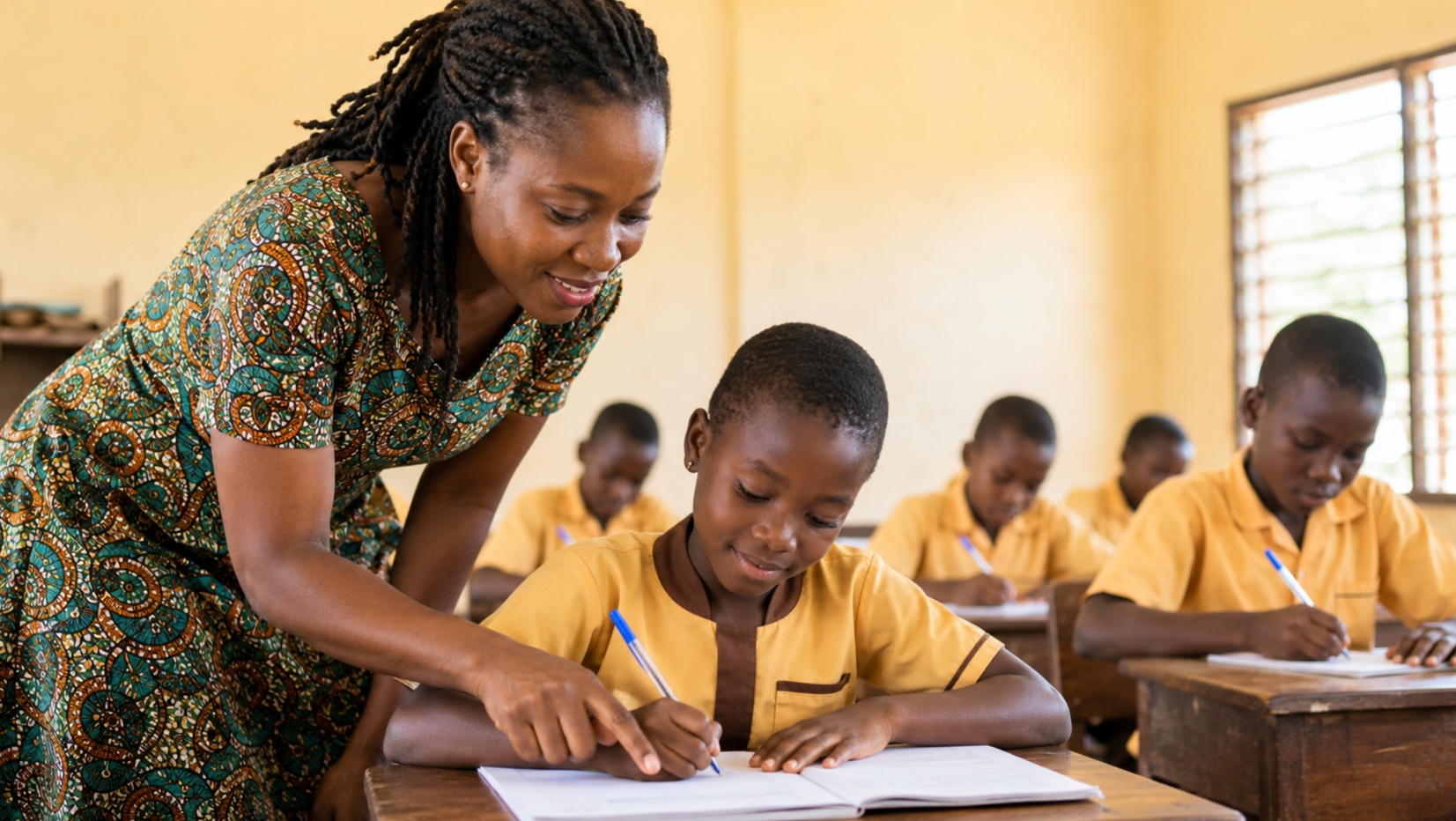
Innovation does not always begin in a sophisticated office surrounded by glass walls and expensive equipment. Sometimes it begins on a dusty village road, in a crowded market, beneath a tree, inside a classroom or during an ordinary conversation between people trying to understand the difficulties confronting their daily lives. Walk through a farming community and listen to the farmers. Sit with traders and understand their frustrations. Speak with teachers and discover what makes their work difficult. Talk with young people searching for employment and listen to what they believe stands between them and opportunity. There is wisdom hidden inside these conversations. Frustration often contains a question, a repeated complaint may contain an idea, and an inconvenience tolerated for years may conceal an opportunity waiting for someone courageous enough to recognize it.
Leadership Begins With Listening
No meaningful solution can survive without understanding the people it is intended to serve, and this is where leadership becomes more than position, title or authority. A leader must be able to speak, persuade and inspire, but the deeper responsibility of leadership is the ability to sit among people, hear their concerns, understand their aspirations and appreciate the reality of their daily lives. Numbers may tell us how many people are affected by a problem, but conversation can tell us what that problem feels like. That is why communication matters. Ideas do not live by themselves; they live through people, and people must understand, trust and participate in the solutions created for them. The farmer should have a voice in shaping the solution to the farmer’s problem. The trader should help explain what makes the business difficult. The student should have a voice in imagining the future of education. When people become part of the solution, an idea becomes more than an invention; it becomes something rooted in real life.
Do Not Wait for Permission
Ghana’s young people must also embrace the truth that meaningful change does not always begin with enormous resources, perfect conditions or permission from powerful people. Great things often begin with very little: a conversation, a notebook, a question, a small experiment, a handful of determined people and the courage to believe that something better is possible. Start with the problem you understand, the people you can reach and the resources available to you. Learn as you move forward, because sometimes the smallest beginning becomes the foundation of something much larger than anyone initially imagined. Beginning small is not failure. Sometimes, beginning small is wisdom.
From Consumers to Creators
For too long, Africa’s relationship with technology has often been shaped by consumption. We use what others create, download what others develop, watch what others produce and purchase what others invent. Ghana’s young people must imagine something greater. They must see themselves not only as consumers of the digital age but as creators within it. There is no reason why an idea born in Accra cannot solve a problem in Nairobi, why an innovation developed in Kumasi cannot find relevance in Lagos, or why an entrepreneur from Tamale cannot build something that eventually serves people across Africa and beyond. The world has become more connected, giving Ghanaian ideas the opportunity to travel farther than ever before. But before an idea can cross the world, it must first solve a real problem somewhere.
The Future Is Already in Our Hands
Perhaps many years from now, historians will look back at this period and ask when Ghana truly began to build its digital future. Perhaps they will point to a particular invention, company or moment of national transformation. Perhaps it will be found in the mind of a young Ghanaian who refused to accept that an old problem must remain an old problem. Perhaps it will be found in a village conversation, a market, a classroom or a modest room where someone sat with little more than a phone, a pen and an idea. Perhaps that person will not know, at that moment, that the question being asked could become the beginning of something much larger.
What if we could do this better?
Ghana needs that question to echo across every community, school, workplace and young mind willing to imagine beyond the limitations of yesterday. The future will not be built merely by those who possess the newest devices. It will be built by those who understand why those devices matter, by those who can look beyond the screen and see the human being on the other side of the problem, and by those who possess the courage to turn an idea into something that makes life better. So let Ghana’s young people take this extraordinary age into their hands, not as spectators but as builders; let them listen before they build, understand before they act, begin before everything is perfect, and transform frustration into imagination, imagination into action and action into solutions. Somewhere, right now, in an ordinary Ghanaian community, there is a problem waiting for an answer. Somewhere else, perhaps only a few streets away, there is a young Ghanaian carrying the possibility of that answer.
The digital renaissance has already begun. The question is no longer whether Ghana’s youth will inherit the future. The question is whether they will have the courage, imagination and purpose to build it.








Comments (0)
No comments yet. Be the first to comment!