 Breaking News


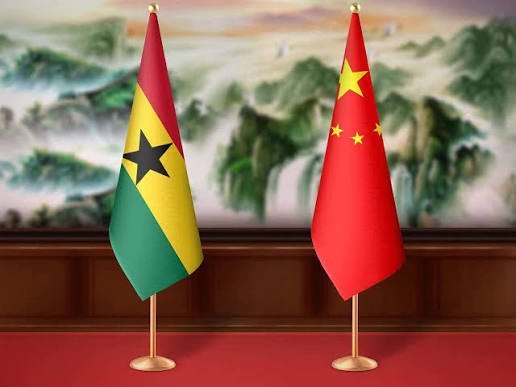
Ghana's relationship with China is neither new nor incidental. For decades, successive Ghanaian governments have engaged the People's Republic of China on infrastructure, trade, investment, mining, technology and development cooperation. Today, however, the relationship is entering a potentially more strategic phase.
The growing global competition for critical minerals has changed the economic and geopolitical significance of countries endowed with natural resources. Minerals that were once viewed primarily as commodities are increasingly regarded as strategic assets essential to electric vehicles, batteries, renewable energy, advanced manufacturing, telecommunications, artificial intelligence and other emerging technologies.
Against this background, the recent engagement in China by the Minister for Lands and Natural Resources, Emmanuel Armah-Kofi Buah, including Ghana's participation in the 2026 China Mining Conference and Exhibition in Tianjin, presents an important opportunity to reflect on the direction of Ghana's mineral diplomacy.
My central question is therefore not whether Ghana should engage China. Ghana should. The more important question is: What strategic outcomes should Ghana seek from its engagement with China, and how can those engagements translate into lasting economic value for the Ghanaian people? That, in my view, is the conversation Ghana should be having.
From Investment Promotion to Economic Transformation
Ghana's efforts to attract investment into mineral processing, refining, technology transfer, skills development and industrialisation are welcome. There is nothing inherently wrong with Ghana seeking Chinese investment. Indeed, China possesses considerable experience and capacity in mineral processing, infrastructure development, manufacturing and industrial supply chains. The opportunity before Ghana is to ensure that such partnerships go beyond the extraction and export of raw materials.
We should therefore measure the success of international investment missions not merely by the number of meetings held, agreements announced or photographs taken, but by the tangible economic outcomes that follow. A ministerial meeting is important diplomacy. A memorandum of understanding can be an important first step. An investment forum can create opportunities. But ultimately, implementation is what transforms diplomacy into development.
The real deliverables should include:
● New processing and refining facilities in Ghana
● Technology transfer and technical skills development
● Greater participation of Ghanaian businesses in mineral supply chains
● Sustainable and skilled employment for Ghanaians
● Opportunities for Ghanaian companies to access international markets
● Infrastructure that supports industrial production
● Greater domestic retention of the value generated from Ghana's mineral resources
● Stronger fiscal and economic benefits to the Ghanaian state
If the China engagement contributes to these outcomes, then Ghana should rightly welcome and celebrate it. But if Ghana continues primarily to export raw minerals while substantial value addition, processing and manufacturing occur elsewhere, then we must continually examine whether our mineral partnerships are delivering the level of national benefit that they should. This is not an argument against foreign investment. It is an argument for better investment partnerships.
Critical Minerals: Ghana's Emerging Geopolitical Opportunity
Perhaps the most important development in global mineral politics is the emergence of critical minerals as strategic assets. Lithium, manganese, bauxite, iron ore, graphite, cobalt and rare earth elements, among others, have become increasingly important to the global economy. Countries and major industrial powers are therefore seeking secure and diversified access to these resources.
For Ghana, this presents an important opportunity. We should begin to look at our mineral resources not simply as commodities to be sold, but as strategic assets that can strengthen Ghana's economic diplomacy and international bargaining position. The question should therefore evolve from: “Who wants to buy Ghana's minerals?” to: “What strategic partnership can Ghana build around its mineral resources, and what value will Ghana retain in the process?”
This distinction is critical. If an international partner seeks access to Ghana's strategic minerals, Ghana should be able to negotiate for more than royalties and extraction. We should seek partnerships involving: processing and refining; technology transfer; research and development; local manufacturing; infrastructure; skills development; Ghanaian participation in supply chains; financing for industrial projects; and access to international markets. That is how natural resources can become a foundation for industrialisation.
Ghana Must Diversify Its Strategic Partnerships
Ghana's engagement with China should not be interpreted as a choice between China and the rest of the world. On the contrary, Ghana should pursue a pragmatic, independent and multi-aligned foreign policy that allows the country to engage multiple partners in accordance with its national interests. Ghana can engage:
● China on investment, infrastructure, processing technology and manufacturing
● the United States on technology, strategic supply chains and private-sector investment
● the European Union on sustainable mineral value chains, technology, financing and industrial partnerships
● Japan and South Korea on advanced technology, manufacturing and industrial development
● India on investment, processing, pharmaceuticals, technology and trade
● and African partners on regional value chains, intra-African trade and continental industrialisation
This is not a rejection of China. It is not an embrace of any particular geopolitical bloc. It is simply the recognition that a country with multiple credible economic partners has greater negotiating flexibility. Strategic diversification should therefore be at the heart of Ghana's mineral diplomacy.
The Strategic Role of the Ministry of Foreign Affairs
This is where I believe Ghana's foreign-policy architecture deserves particular attention. The engagement between Ghana and China on minerals should not be viewed solely as a mining or investment matter. It is increasingly a matter of economic diplomacy, strategic diplomacy and national development. The Ministry of Lands and Natural Resources has the technical and sectoral mandate to manage Ghana's mineral resources. The Ministry of Foreign Affairs, however, has a broader responsibility to ensure that Ghana's international engagements are aligned with the country's foreign-policy objectives and national interests. The two institutions should therefore work closely together.
1. The Foreign Ministry Should Help Establish the Geopolitical Framework
China is not simply another commercial actor. It is a major global economic power with significant capabilities in infrastructure, manufacturing, technology and mineral processing. Ghana must therefore determine the nature of the strategic relationship it seeks. Is Ghana looking for: Chinese capital? Processing technology? Manufacturing partnerships? Infrastructure investment? Skills development? Access to Chinese markets? Critical-mineral supply-chain partnerships? Or a broader strategic economic partnership? These questions require coordination beyond individual investment transactions. The Ministry of Foreign Affairs should help place Ghana's mineral engagements within the broader architecture of Ghana's foreign and economic policy.
2. Ghana's Diplomatic Missions Should Become Engines of Economic Diplomacy
Ghana's diplomatic missions abroad have an opportunity to play a much stronger role in economic statecraft. The Ghana Embassy in Beijing, for example, can serve as an important bridge between the Government of Ghana → the Chinese Government → Chinese investors → Ghanaian businesses → Ghana's mineral-processing and manufacturing industries. Our diplomatic missions should actively identify credible investors, facilitate government-to-government dialogue, monitor market developments, promote Ghanaian businesses and help connect Ghanaian enterprises to international supply chains. Diplomacy in the 21st century must increasingly produce economic opportunities for the citizens it represents. This does not mean abandoning traditional diplomacy. Rather, it means strengthening diplomacy with a more deliberate economic and strategic dimension.
3. A Coordinated Ghanaian Negotiating Position Is Essential
Ghana's mineral diplomacy would benefit from stronger institutional coordination. Relevant institutions could include: the Ministry of Foreign Affairs; the Ministry of Lands and Natural Resources; the Ministry of Finance; the Ministry of Trade, Agribusiness and Industry; the Minerals Commission; the Ghana Investment Promotion Centre; relevant regulatory agencies; and private-sector representatives where appropriate. A coordinated approach would help ensure that Ghana speaks with clarity and consistency when negotiating strategic investments. It would also reduce the risk of individual engagements being treated as isolated initiatives rather than components of a broader national strategy.
4. Critical Minerals Should Become an Instrument of Economic Diplomacy
Ghana should increasingly view critical minerals as part of its economic and diplomatic toolkit. The principle should be straightforward: if Ghana provides access to strategic natural resources, Ghana should negotiate for strategic economic value in return. That value may come through processing, technology, infrastructure, manufacturing, training, market access or investment in local industries. This is not unreasonable. It is simply the principle of reciprocity in international economic relations.
5. Ghana Must Avoid Dependency
While Ghana should welcome Chinese investment, it should also guard against excessive dependence on any single country, market, source of financing or technology. The same principle should apply to every external partner. Strategic autonomy does not mean isolation. It means having sufficient alternatives to make independent decisions. If China wants Ghanaian minerals, Ghana should engage China. If Europe wants Ghana's critical minerals, Ghana should engage Europe. If the United States seeks partnerships with Ghana in strategic mineral supply chains, Ghana should engage the United States. If India, Japan, South Korea or other credible partners present opportunities, Ghana should engage them as well. The objective should be to create an environment in which Ghana can choose partnerships based on value, credibility and national interest. That is the essence of a pragmatic multi-alignment strategy.
6. Reciprocity and Accountability Must Define Mineral Diplomacy
Ultimately, diplomacy must produce results. If Ghana grants access to strategic mineral resources, what does Ghana receive in return? This question should form part of every major strategic mineral engagement. We should therefore expect greater clarity regarding: the nature of investment commitments; the minerals involved; the level of processing that will take place in Ghana; the infrastructure associated with the investments; the number and quality of jobs expected to be created; the participation of Ghanaian businesses; technology and skills transfer; fiscal benefits to the Ghanaian state; and the measurable timelines for implementation. The public deserves to know the broad direction and expected outcomes of major strategic agreements, subject of course to legitimate commercial confidentiality and national-security considerations. Transparency strengthens confidence. Accountability strengthens institutions. And measurable outcomes strengthen diplomacy.
Beyond the China Trip: What Should Come Next?
The success of Ghana's engagement with China should ultimately be assessed over time. The immediate question should not be how many meetings were held or how many photographs emerged from the visit. The more important questions are: What investments will materialise? What processing will take place in Ghana? What technology will be transferred? How many Ghanaian businesses will participate? How many sustainable jobs will be created? How much additional value will remain in Ghana? What long-term industrial capacity will be created? These are the metrics that can turn mineral diplomacy into economic transformation.
Conclusion: From Mineral Diplomacy to Economic Statecraft
Ghana–China relations have reached a point where mining, trade, technology, investment, industrialisation and geopolitics are increasingly interconnected. This requires Ghana to approach mineral diplomacy with greater strategic coherence. The Ministry of Lands and Natural Resources has an important role to play in identifying, managing and developing Ghana's mineral opportunities. The Ministry of Foreign Affairs also has a critical role in ensuring that those opportunities are integrated into Ghana's broader foreign-policy and economic-diplomacy objectives. The two institutions should therefore work together — not in competition, but in complementarity. The Lands Ministry can help define the mineral opportunity. The Foreign Ministry can help position that opportunity within Ghana's broader geopolitical and economic strategy. Together, they can help transform Ghana's mineral resources into instruments of industrialisation, employment, technological advancement and national development.
Ghana must not aspire merely to become a reliable source of raw materials for the industries of other countries. We should aspire to become a strategic participant in the global mineral value chain. That means negotiating confidently. That means welcoming investment while protecting national interests. That means diversifying our international partnerships. That means demanding value addition. That means empowering Ghanaian businesses. That means investing in our people. And above all, it means ensuring that Ghana's natural resources contribute meaningfully to the prosperity of present and future generations.
The question, therefore, is not whether Ghana should engage China. Ghana must engage China. The question is whether we can transform that engagement into a partnership that advances Ghana's long-term national interest. That is the foreign policy Ghana needs. That is the economic diplomacy Ghana deserves. And that is how Ghana–China relations can become a genuine instrument of national transformation.
By Mathias Bonzo-Ewereko Boateng
Centre for Global Affairs and Responsible Governance









Comments (0)
No comments yet. Be the first to comment!