 Breaking News

There is a question that can change the way a healthcare system sees a patient:
Who needs care first?
It is a simple question, but behind it lies a profound responsibility. When patients arrive at a hospital, they do not all have the same level of urgency. Some need immediate intervention. Others can safely wait. Some require referral. Others can be managed at a different level of care.
The ability to recognise those differences quickly and accurately can influence patient safety, emergency response and the entire patient journey. For me, this question has been at the centre of a 16-year professional journey.
It started in Sunyani
In 2010, I was a newly qualified nurse at Sunyani Regional Hospital. That was where my journey in triage began. I learned that triage was not simply about receiving patients. It required clinical judgement, rapid assessment, prioritisation, and the ability to recognise who could not safely wait. My experience began before the South African Triage Scale was accepted for wider implementation within the Ghana Health Service in 2012. Those early years taught me a principle that has remained with me: Every patient deserves assessment, but not every patient has the same urgency.
Two years later, my professional journey took me to Greater Accra Regional Hospital.
Fourteen years of emergency experience
From 2012 to March 2026, I worked within the Emergency Department and triage environment of Greater Accra Regional Hospital, a regional referral hospital. The experience was transformative. I encountered increasingly complex patients, emergency conditions and referrals. I saw the pressure placed on healthcare workers when patient volumes increased. I saw how delays in one part of the system could affect another. And gradually, my understanding of triage changed. I stopped asking only:
“Who should be seen first?”
I began asking:
“How can we build a system that consistently identifies who needs care first and directs that patient to the right care pathway?” That was when triage stopped being simply a clinical skill in my mind. It became a health-system opportunity. From the triage desk to the entire hospital In April 2026, I joined Weija Gbawe Municipal Hospital. Here, my vision expanded. I began developing a hospital-wide approach to integrated triage involving areas such as Emergency, OPD, Maternity, Paediatrics, Surgical and Medical services.
The idea is straightforward: The patient should experience one coordinated healthcare journey, even though the hospital is divided into different departments. This is the thinking behind what I call the Nurse-Led Integrated Triage Framework. It moves the conversation from: “Where is the triage desk?” to: “How does the entire hospital prioritise, communicate, coordinate and move patients safely?” That is a much bigger question.
Why this matters to Ghana?
Ghana's healthcare system, like many health systems around the world, faces pressure from increasing patient demand, limited resources, workforce constraints and challenges in patient flow.
We cannot solve every healthcare problem simply by building more infrastructure. We must also make our existing systems smarter, more coordinated and more responsive.
Triage can contribute to this. A strong triage system can help identify emergencies early, prioritise patients according to urgency, support appropriate referral and improve the organisation of patient flow. But we need evidence. We need Ghanaian research. We need nurses and other healthcare professionals asking difficult questions and testing practical solutions in our own facilities.
The nurse must become part of the solution. There is another revolution that must happen alongside the triage revolution. It is a revolution in how we see nurses. Nurses are not merely implementers of healthcare policy.
Nurses are clinicians. Researchers. Educators. Advocates. Coordinators. Innovators. And increasingly, health-system leaders. Nurses are present throughout the patient journey. We see the waiting areas, the emergency rooms, the families, the communication gaps, the bottlenecks and the consequences of system failure. That experience is valuable knowledge. We must convert that knowledge into research, innovation and policy. Africa should not only import healthcare solutions. One of the greatest opportunities before African healthcare is our ability to develop solutions from our own realities. We should not only ask: “What model has worked elsewhere?” We should also ask: “What can we develop here?” Our hospitals are laboratories of experience. Our patients are teaching us. Our healthcare workers are generating knowledge every day.
We need to document it. Research it. Evaluate it. Publish it. And scale what works.
From Ghana to the global health conversation, my long-term vision extends beyond one hospital. Global health increasingly focuses on universal health coverage, quality of care, emergency care, patient safety and stronger health systems. Africa must be represented not only as a recipient of global health interventions but also as a producer of health innovation and knowledge.
My ambition is to contribute to that conversation through nursing, research, triage innovation and health-system transformation. Perhaps a question that began with a newly qualified nurse in Sunyani can eventually contribute to a global conversation about how health systems should prioritise human need. That is the power of innovation. It can begin locally and travel globally. The call to action The triage revolution cannot be built by one nurse. It requires a movement.
I therefore invite:
Nurses — to see yourselves not only as caregivers, but as researchers, innovators and health-system leaders. Hospital leaders — to invest in effective triage systems, patient flow improvement and nurse-led innovation. Researchers and academic institutions — to study what works and generate rigorous Ghanaian evidence. Policymakers — to create an environment where frontline healthcare professionals can contribute to health-system design. Digital-health innovators — to work with clinicians to develop technologies that strengthen, rather than replace, clinical judgement. The Ghana Health Service and health-sector stakeholders — to continue the conversation about how integrated triage can contribute to safer, more coordinated and more responsive healthcare. And to every young nurse reading this:
Do not underestimate the problem you see every day. It may be the beginning of your research question. It may become your innovation. It may become your life's work.
The revolution has already begun My journey started in Sunyani in 2010. It continued through years of emergency and triage experience at Greater Accra Regional Hospital. It has now entered a new chapter at Weija Gbawe Municipal Hospital. Sixteen years later, I no longer see triage simply as a clinical task. I see it as an opportunity to rethink healthcare delivery. The question that began my journey was: Who needs care first?
Today, my question is:
How can we build health systems that consistently deliver the right care, to the right patient, at the right time, in the right place?
That question belongs to all of us. Because the future of healthcare will not be built by one profession alone. It will be built by professionals who are willing to see problems, ask better questions and create better systems.
The triage revolution is not coming. It has already begun. And the next chapter belongs to all of us.
One nurse.
One question.
One patient.
One system.
One revolution.
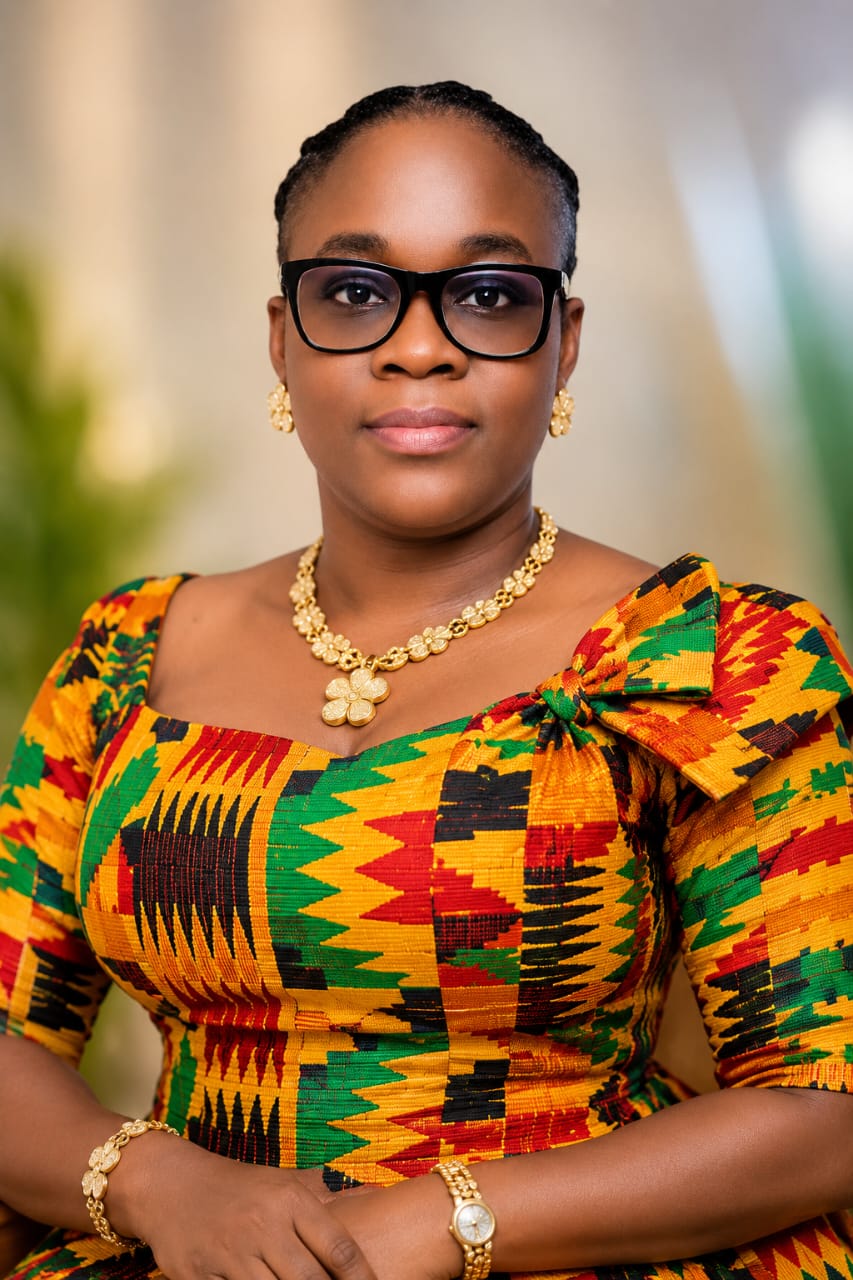
By Sarah Danquah, RN
Nurse leader | Integrated triage practitioner | Healthcare systems innovator







Comments (0)
No comments yet. Be the first to comment!