 Breaking News

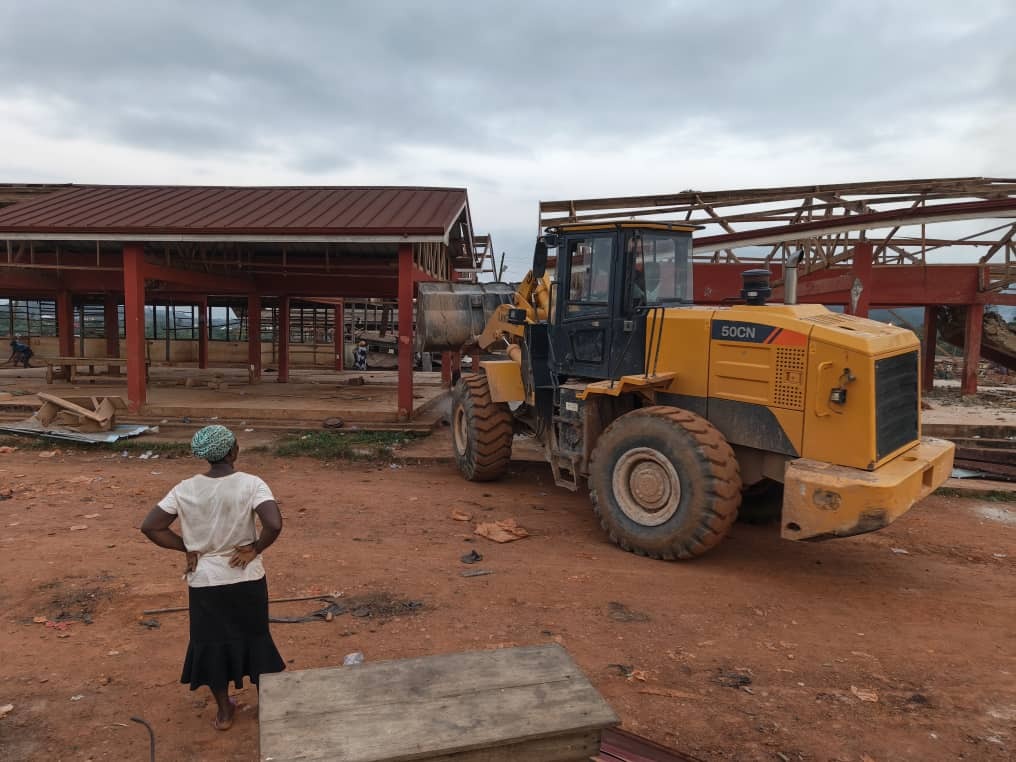
The Aowin Municipal Assembly, led by Municipal Chief Executive (MCE), Stephen Morcher, has demolished the old Enchi market, reportedly to make way for a new 24‑hour economy market.
But an important question remains unanswered: what happens to the traders during construction?
There is nothing inherently wrong with replacing an old market with a modern facility if the project is properly planned, adequately funded and ultimately improves the trading environment.
A new market could provide better infrastructure, sanitation, security and commercial opportunities for residents of Enchi. Development, however, must also take into account the people whose livelihoods depend on the existing facility.
The old Enchi market was not simply an unused or abandoned structure waiting to be replaced. It was developed progressively over several administrations, with successive local authorities investing in infrastructure to improve trading conditions.
The market’s development dates back to the era of former President Jerry John Rawlings, when the then District Chief Executive acquired the land for the project.
During the administration of former President John Agyekum Kufuor, then‑DCE Kingsley Ofori Asante cleared the site and began construction of the market, alongside the development of an abattoir.
One of the notable contributors to the market’s subsequent development was Oscar Ofori Larbi, who is now the Member of Parliament for Aowin.
During his tenure as DCE, Ofori Larbi made significant additions to the market, including the construction of several market sheds and a toilet facility intended to improve conditions for market women and other traders.
Those interventions were not merely physical additions; they reflected an effort by the local authority at the time to provide traders with a more conducive environment in which to conduct their businesses, particularly the women who depended on the market for their daily livelihoods.
Successive DCEs continued the process. After Ofori Larbi’s tenure, Samuel Adu Gyamfi contributed additional sheds to complement the work undertaken by his predecessors.
The market therefore represented years of incremental public investment before its eventual demolition under the leadership of MCE Stephen Morcher.
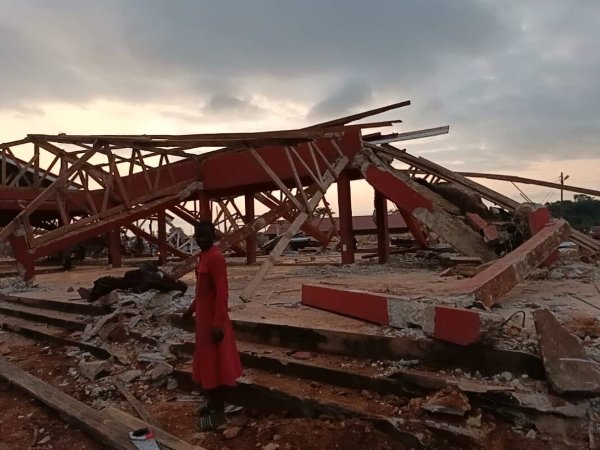
This history complicates the issue. If the objective is to provide Enchi with a modern 24‑hour economy market, could the new facility have been constructed elsewhere first, allowing traders to continue using the existing market until the replacement was ready?
Aowin Paramount Chief Beyeeman Tano Kwaw Benbuin III has raised precisely this concern. “Can’t they build the market elsewhere and leave this one there for the people because land is not our problem in Aowin?” he asked, questioning whether demolition was the only viable option.
The issue is particularly pressing because traders cannot simply suspend their businesses while awaiting construction completion.
The Assembly therefore needs to clarify whether a temporary trading location has been secured, how affected traders will be accommodated and what arrangements have been made to protect their livelihoods during the transition.
The proposed project may eventually deliver a more modern and economically productive facility for Enchi. But the success of Stephen Morcher’s initiative should not be judged solely by the structure that eventually replaces the old market. It should also be measured by how responsibly the Assembly manages the people whose livelihoods have been disrupted in the process.
Enchi deserves a modern market. Its traders deserve a viable place to do business while that modern market is being built. Those two objectives should not be mutually exclusive.











Comments (0)
No comments yet. Be the first to comment!