 Breaking News

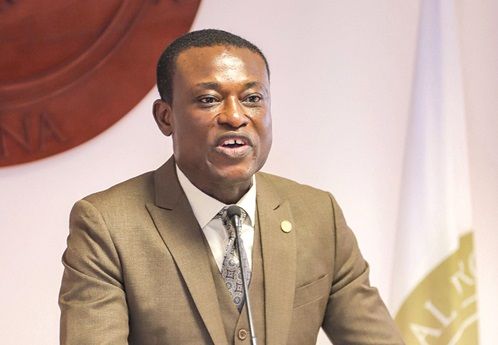
The Supreme Court has unanimously dismissed a challenge to the Office of the Special Prosecutor’s authority to commence prosecutions independently, preserving the statutory autonomy of the body central to Ghana’s most prominent corruption inquiries.
A seven-judge panel, led by Chief Justice Paul Baffoe-Bonnie, rejected the suit lodged by private legal practitioner Noah Adamtey. Adamtey contended that the 1992 Constitution vests prosecutorial power exclusively in the Attorney‑General under Article 88, and that Parliament exceeded its remit by granting the Office of the Special Prosecutor (OSP) independent authority in the Office of the Special Prosecutor Act, 2017 (Act 959).
He sought a declaration that the provisions conferring such independence, principally sections 3(3) and 4 of Act 959, were inconsistent with the Constitution and should be struck down. The Court declined to invalidate those sections, leaving the statute intact.
The judgment runs counter to arguments advanced by the Attorney‑General’s Department, whose Deputy, Justice Srem‑Sai, had maintained that prosecutorial powers reside solely with the Attorney‑General.
The ruling vindicates the position of fourteen civil society organisations, including Transparency International Ghana and IMANI Africa, which intervened in the proceedings to defend the OSP, an institution they supported establishing.
The decision removes legal uncertainty that had clouded the OSP’s caseload. Earlier this year a High Court judgment had held that the office required authorisation from the Attorney‑General to prosecute, a finding that stalled the trial of former minister Mustapha Hamid pending the Supreme Court’s determination.
Meanwhile the Special Prosecutor, Kissi Agyebeng, continued to pursue major cases, including proceedings against former finance minister Ken Ofori‑Atta, whom the OSP continues to describe as a fugitive.
Mr. Agyebeng, who has said that politicians treat his office as "bad news", now has the nation’s highest court confirm that the Special Prosecutor may initiate prosecutions without seeking prior approval.







Comments (0)
No comments yet. Be the first to comment!