 Breaking News

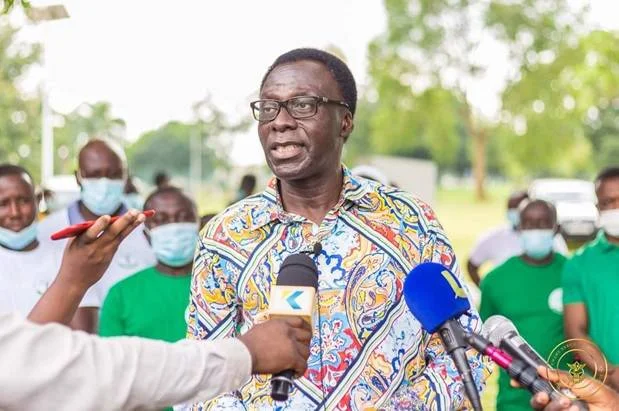
The President of Friends of Rivers and Waterbodies, Nana Dwomoh Sarpong, has called for assembly officials who fail to enforce laws on physical development to be queried, as flooding continues to plague the national capital.
He noted that while Accra has well-laid development plans on paper, enforcement remains weak. According to him, the failure to hold officials accountable has contributed to growing laxity in enforcing development regulations.
“Those officials tasked with enforcing the laws, but who fail in their responsibility, should be made to answer for it,” he said in an interview with the Daily Graphic in Accra.
His remarks come as floodwaters have again submerged parts of the city, a crisis he described as increasingly dire, warning that conditions are deteriorating year after year.
“The flooding being experienced is getting worse,” he said.
The environmental advocate also blamed unplanned urban development for exacerbating the crisis.
He noted that officials may post “Stop Work” notices at illegal construction sites, yet developers often resume work the very next day with impunity.
“You cannot continue with the unplanned development of the city. It should stop,” he stressed.
He further lamented the increasing encroachment on waterways across , describing it as a major contributor to the flooding situation.
In addition, the Friends of Rivers and Waterbodies President cited poor sanitation as another major factor and insisted that the city’s chaotic growth patterns must be halted immediately.
He also called for intensified public education to sensitise citizens on proper urban development and environmental practices.
The environmental campaigner further questioned the cyclical nature of demolition exercises targeting structures built in waterways.
“For how long can we continue demolishing buildings in waterways?” he asked, suggesting that preventive enforcement would make such drastic measures unnecessary.
Beyond enforcement, Nana Sarpong proposed a sweeping national policy requiring all households to adopt rainwater harvesting, a practice he said has been neglected for years despite its long history in the country.
“Rainwater harvesting has been with us for many years. Why have we stopped the practice?” he queried.
He urged the to incorporate rainwater harvesting into national water policy, arguing that proper storage systems could fundamentally transform household water security.
“Proper rainwater harvesting systems can significantly reduce household dependence on purchased water while also easing pressure on drainage systems,” he said, advocating for the practice to become mandatory for every household.
He stressed that unless authorities strictly enforce planning regulations and promote sustainable environmental practices, flooding in Accra will continue to worsen.







Comments (0)
No comments yet. Be the first to comment!