 Breaking News

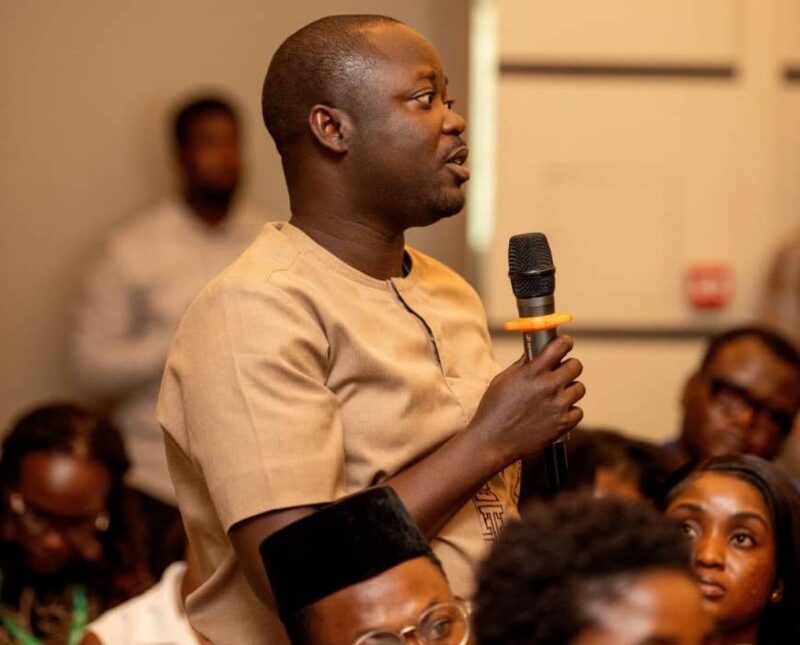
Executive Director of the Centre for Environmental Management and Sustainable Energy (CEMSE), Benjamin Nsiah, has raised concerns over what he describes as inconsistency in the conduct of public officials, following the controversy surrounding remarks by the Chief Executive Officer of the Ghana Free Zones Authority, Dr Mary Awusi.
His comments come in the wake of an apology issued by the Chief of Staff, Julius Debrah, on behalf of Dr Awusi over comments directed at the Chairman of the Church of Pentecost, Apostle Eric Nyamekye.
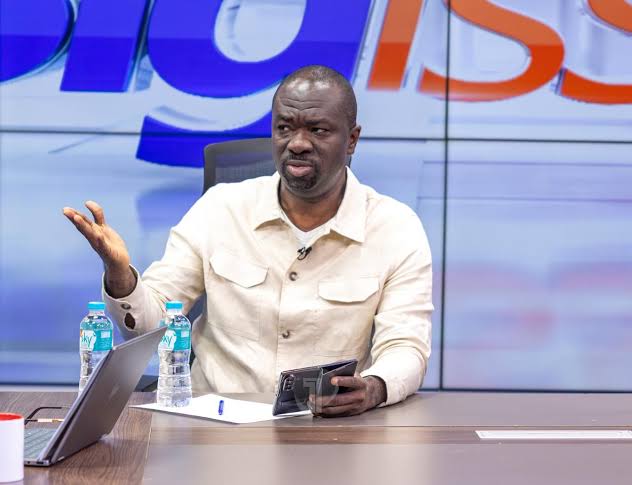
Speaking on Good Morning Ghana on Metro TV with Moro Awudu, Mr Nsiah expressed dissatisfaction with the manner in which the apology was delivered, questioning both its tone and authority.
He argued that the emotional nature of the apology, particularly the Chief of Staff’s visible display of emotion, raised concerns about its appropriateness.
“He described the incident as a slip and unintentional, so I do not understand the need for such an emotional reaction. Leadership requires composure, especially in public,” he stated.
Mr Nsiah further questioned whether the apology represented an official government position or a personal expression by the Chief of Staff.
“Was that a government position or a personal apology? There is a need for clarity. A formal statement from the presidency would have addressed the ambiguity,” he noted.
Turning to Dr Awusi’s conduct, he stressed that individuals occupying high public office must exercise restraint and avoid engaging in unnecessary controversies.
“As CEO of the Free Zones Authority, one must remain focused on strategy, innovation and institutional responsibilities, rather than being drawn into public disputes,” he said.
He also linked the incident to broader concerns about discipline and professionalism among public appointees, suggesting that some officials display inconsistent behaviour.
“At times, the conduct of some appointees raises concerns about stability in their public engagements. There appears to be inconsistency in how they respond to issues,” he remarked.
Mr Nsiah further argued that apologies alone may not be sufficient to correct such conduct, advocating for stricter accountability measures.
“Apologies do not always change behaviour. When there are consequences, it sends a stronger signal and serves as a deterrent,” he stated.
He also defended the position taken by the Chairman of the Church of Pentecost, insisting that the concerns raised were legitimate and widely shared.
“The pastor’s comments reflect concerns many Ghanaians have expressed, including government itself, particularly on issues such as illegal mining and water pollution,” he added.







Comments (0)
No comments yet. Be the first to comment!