 Breaking News

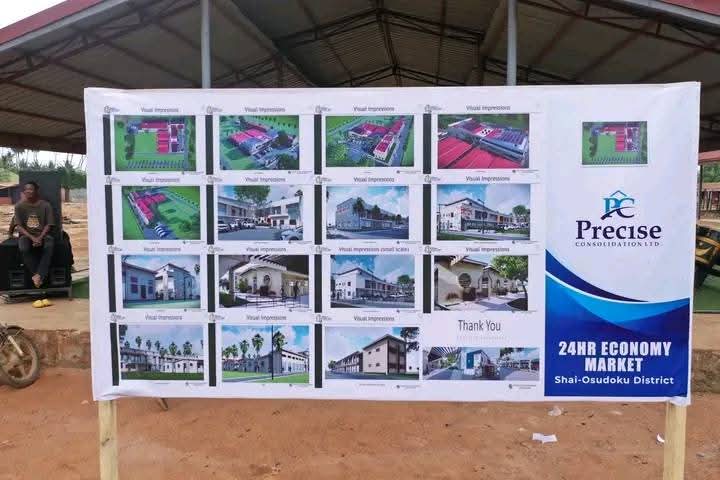
The Member of Parliament for Shai-Osudoku, Linda Obenewaa Akweley Ocloo, has described the commencement of construction of the 24-hour Economy Market in Dodowa as a major step towards expanding economic opportunities, creating jobs and supporting businesses within the constituency.
Speaking at the sod-cutting ceremony in Dodowa on Tuesday, September 22, 2026, she said the project demonstrates the government’s commitment to turning its 24-hour economy agenda into practical opportunities that directly benefit local communities.
She highlighted the critical role markets play in the livelihoods of women, particularly those engaged in petty trading, food processing, agriculture and other small-scale enterprises.
According to the Regional Minister, the new facility will provide an improved environment for traders and entrepreneurs to expand their businesses, generate employment and contribute to the socio-economic development of the Shai-Osudoku District.
Madam Ocloo used the medium to encourage women, the youth, traders and other prospective beneficiaries to take advantage of the opportunities the facility will provide when completed.
The MP, who doubles as the Greater Accra Regional Minister, further urged the contractor to prioritise the employment of residents during the construction phase.
She stressed that the use of local labour would ensure that members of the community derive immediate economic benefits from the project.
The Minister commended the government for prioritising the 24-hour economy initiative and acknowledged the contributions of the Shai-Osudoku District Assembly, traditional authorities, technical teams and other stakeholders whose efforts have contributed to bringing the project to the construction stage.
She expressed optimism that, upon completion, the market would develop into a vibrant commercial and entrepreneurial hub, creating employment, supporting local businesses and stimulating economic activity in Shai-Osudoku and the wider Greater Accra Region.
The sod-cutting ceremony was attended by traditional leaders, assembly members, heads of departments and agencies, traders, farmers, artisans and other stakeholders.






Comments (0)
No comments yet. Be the first to comment!