 Breaking News

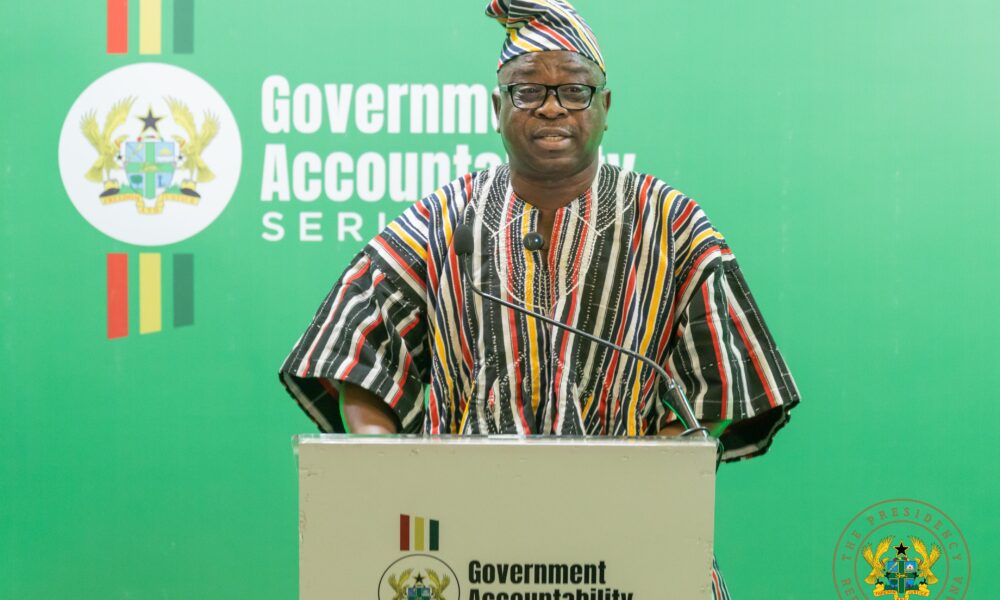
Ghana has signed ten non-binding cooperative agreements with key international institutions, positioning the country as a credible hub for global climate investment.
These agreements span climate finance mobilisation, renewable energy development, carbon market expansion, and climate-resilient agriculture, as Ghana advances its strategic climate agenda.
Key Agreements and Ministerial Insights
The Minister of State for Climate Change and Sustainability, Seidu Issifu, announced the agreements during the Government Accountability Series at the Presidency on Wednesday, May 6, 2026.
He detailed a year of efforts by his office to shift Ghana’s climate strategy from a fragmented, reactive approach to a coordinated, investment-focused, and globally integrated framework.
“We are established to align national efforts, unlock strategic partnerships, mobilise climate finance at scale, and ensure that Ghana’s climate agenda drives our economic transformation,” he said.
The minister also noted his appointment to the board of the Climate Vulnerable Forum (CVF) and Vulnerable Twenty (V20) Group, a coalition of more than 74 developing nations highly vulnerable to climate change. He described this as a reinforcement of Ghana’s role in global climate finance reform.
The ten agreements address priority sectors, including environmental, social, and governance (ESG) compliance; sustainable infrastructure; carbon market development; and climate-resilient industrial growth.
According to Hon. Issifu, these pacts lay the groundwork for converting policy pledges into tangible programmes, projects, and investments.
His office has facilitated engagement between the CVF and major national bodies, such as the Ghana Infrastructure Investment Fund, Consolidated Bank Ghana, the Ghana Investment Promotion Centre, and the National Investment Bank.
He disclosed that, this has produced a pipeline of climate investment opportunities in renewable energy, climate-resilient infrastructure, sustainable agriculture, and early warning systems, now shared with the CVF Secretariat for promotion to international financiers.
Hon. Issifu emphasised that climate change transcends environmental concerns, posing a direct threat to Ghana’s economy, infrastructure, water security, food systems, and energy transition.
“Climate action is not charity. It is a strategy. It is an investment in Ghana’s future stability, resilience, and prosperity,” he said.







Comments (0)
No comments yet. Be the first to comment!