 Breaking News

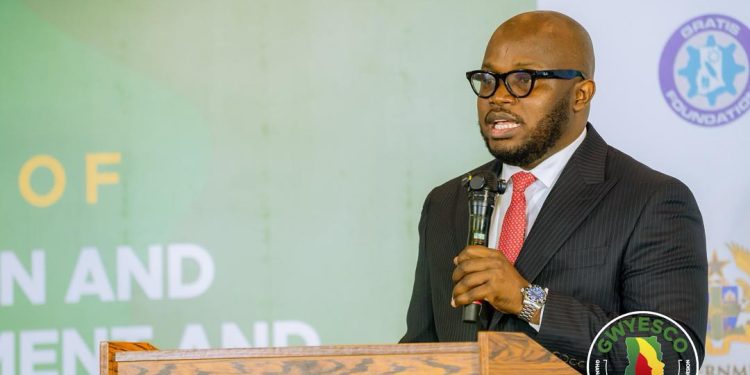
Government has launched the Ghana Women and Youth Employment and Social Cohesion (GWYESCO) Programme, a major job creation initiative expected to generate more than 30,000 employment opportunities for women and young people across the country.
The programme, funded by the African Development Bank (AfDB), is being executed by the Ministry of Finance with the Social Investment Fund (SIF) serving as the implementing agency.
The launch brought together senior government officials and development partners, including Deputy Minister for Finance Thomas Ampem Nyarko, AfDB Country Director Halimah Hashi, and Chief Executive Officer of the Social Investment Fund, Abass Nurudeen.
The initiative is designed to tackle youth unemployment, promote women’s economic empowerment, and strengthen social cohesion by providing sustainable livelihood opportunities, particularly in vulnerable and underserved communities.
Speaking at the launch, Mr. Nurudeen said the programme is anchored on the belief that empowering women and young people with skills, financing, and opportunity is central to national development.
“At the heart of this programme is the idea that when women and young people are empowered with skills, financing opportunities and hope, nations thrive,” he stated.
He noted that youth unemployment and underemployment remain pressing challenges in Ghana and across Africa, driven largely by limited access to market-relevant skills and financing gaps that affect women entrepreneurs and young innovators.
The GWYESCO Programme is structured around three key interventions: demand-driven skills training aligned with emerging sectors, expanded access to finance and business development services for women- and youth-led enterprises, and strengthened institutional systems to ensure effective implementation.
Beneficiaries will receive training in STEM, digital technology, technical and vocational education and training (TVET), agribusiness, and the creative arts. The programme also includes the renovation and equipping of TVET centres nationwide to improve skills development infrastructure.
Additionally, women- and youth-owned MSMEs will benefit from entrepreneurship support, access to financing, and business development services aimed at improving growth and sustainability.
By 2029, the programme targets over 22,000 people into wage or self-employment, training for more than 28,000 beneficiaries in priority skills areas, support for 10,000 MSMEs, financing access for 8,000 businesses, and the construction or upgrading of 10 TVET centres across the country.
A key feature of the initiative is its Results-Based Financing (RBF) model, which links funding directly to measurable outcomes rather than activities.
“This is a shift from financing inputs to financing impact,” Mr. Nurudeen explained, adding that the model is designed to strengthen accountability, transparency, and performance-driven delivery.
While acknowledging potential implementation challenges such as bureaucratic delays and coordination bottlenecks, organisers say the programme will rely on stronger collaboration and innovation among stakeholders to ensure success.









Comments (0)
No comments yet. Be the first to comment!