 Breaking News

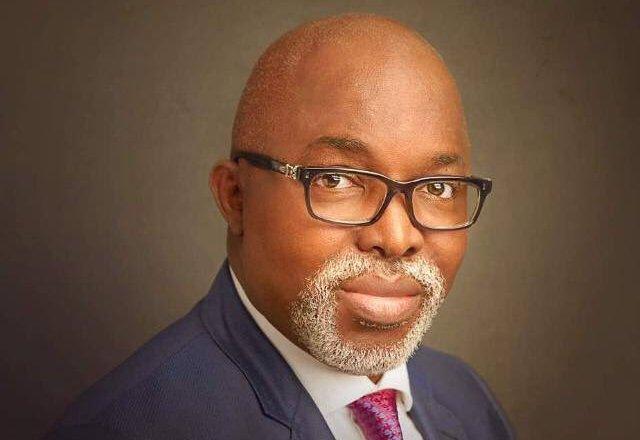
Former Nigeria Football Federation (NFF) president Amaju Pinnick has asserted that the Super Eagles would “definitely” have qualified for the 2026 World Cup had he remained in charge.
Nigeria, a traditional giant in African football, will miss the global tournament for the second consecutive time, causing widespread disappointment across the continent, especially with FIFA’s expanded format, which now provides Africa with nine automatic spots.
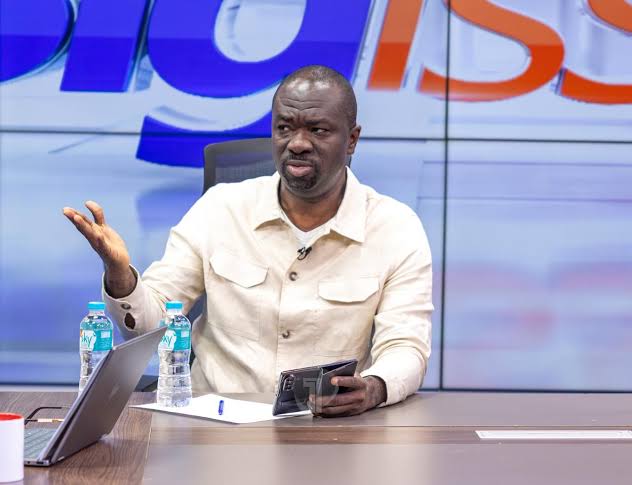
Speaking on Sunday, January 25, 2026, during Oliseh’s Global Football Insights, Pinnick expressed his astonishment at the team's decline during the qualification phase. "I didn't see it coming because ten teams from Africa will qualify," he remarked, highlighting the nine direct berths and one inter-confederation playoff opportunity.
For the Nigerian public, the prospect of missing the 2026 tournament, scheduled to unfold across Canada, Mexico, and the United States, is a hard pill to swallow. Pinnick, who presided over the NFF between 2014 and 2022, described this failure as a significant missed opportunity for the nation.
He promptly contrasted the current scenario with the 2018 qualifiers, where, despite facing a notoriously challenging group, the Super Eagles secured their place in Russia under his leadership. Reflecting on the disappointment of the 2022 qualifiers, wherein Nigeria fell short against Ghana due to the away goals rule, Pinnick remained confident about his record.
“We didn’t win, but we didn’t lose. We were knocked out by the away goal rule. For the 2026 World Cup, if I were there, definitely, Nigeria would have qualified.”
While making these bold claims, Pinnick was careful not to entirely undermine his successor. He provided a balanced critique of the current NFF president, Ibrahim Gusau, recognising the complex challenges facing Nigerian football at every level.
Pinnick’s remarks have sparked a lively debate among supporters in Lagos, Abuja, and the broader diaspora. While some fans laud the stability and sponsorship agreements secured during his tenure, others recall the 2022 setback as the catalyst for the current downturn.
With the Super Eagles now compelled to observe from the sidelines for another four-year cycle, attention must turn to a long-term rebuild. The NFF faces the formidable challenge of reconfiguring the national team framework to ensure that Africa's most populous nation is not left behind again in 2030.





Comments (0)
No comments yet. Be the first to comment!